DjangoCon US 2026 recap
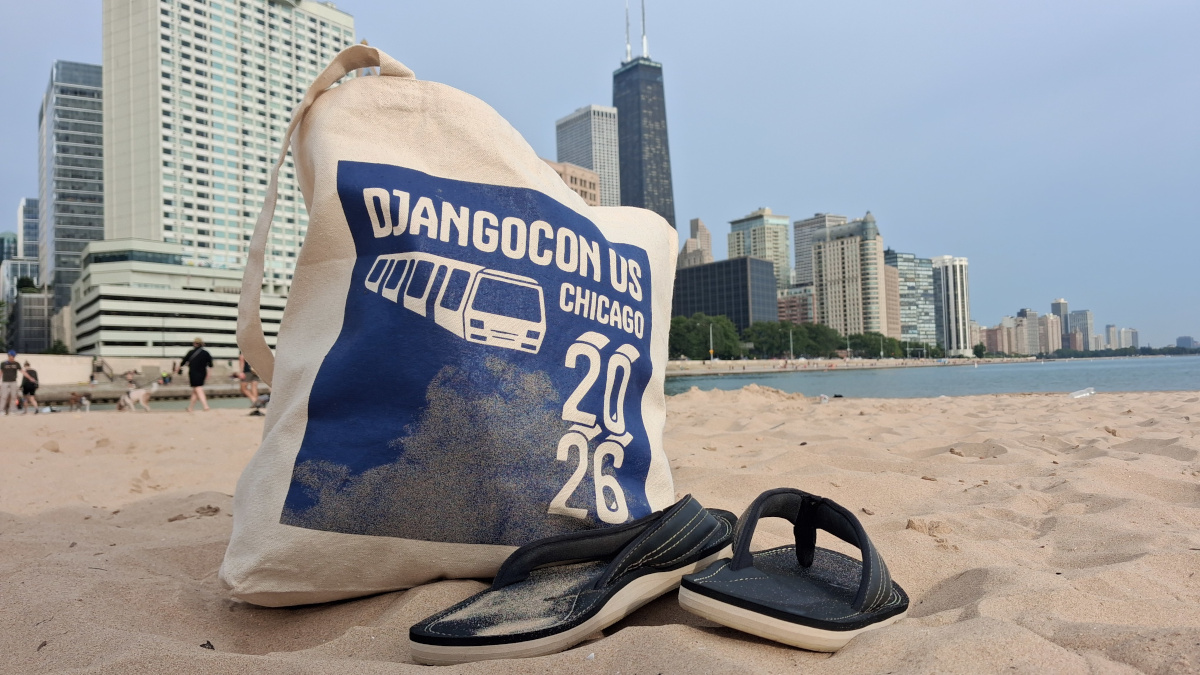
DjangoCon US 2026 was my fifth time attending the conference, and it was exactly what I hoped it would be. I’m feeling rejuvenated and optimistic about the community’s future. It was great catching up with people I don’t often get to see.
PythonAnywhere and Django Simple Deploy
One major benefit of attending a conference is being able to connect with people and quickly iterate on a project. This year, I took advantage of that.
The week before the conference, I decided to build a Django template project that would deploy to PythonAnywhere. I chose to integrate it with the Django Simple Deploy plugin for PythonAnywhere from Colin Copeland at Caktus. It’s a relatively new package, so I ran into a few friction points and created a couple of PRs to smooth them down. In Chicago, Colin and I were able to chat about the project, discuss the vision for it, and implement some of the changes. While I know Colin would have collaborated with me virtually, it was 100x more fun to discuss the changes in person with him. It was reassuring to see that even someone as accomplished as Colin doesn’t have all the answers, and he was glad to have my help.
Bringing people into the community
One of my goals at DjangoCons these days is to bring people into the community. And while I’m not as skilled as Jeff Triplett at this, I feel like I was able to connect with several new community members. It was cool walking down the aisle at the end of the talk and being grabbed by Darthnall from the Django Discord asking for a bookmark, one of the paper bookmarks I made. At the end of the week, I may or may not have overheard him telling someone I’d been right: the DjangoCon US community really is that welcoming. Another highlight was meeting Rickey Shideler, who introduced himself by excitedly telling me I’d reviewed his PR.
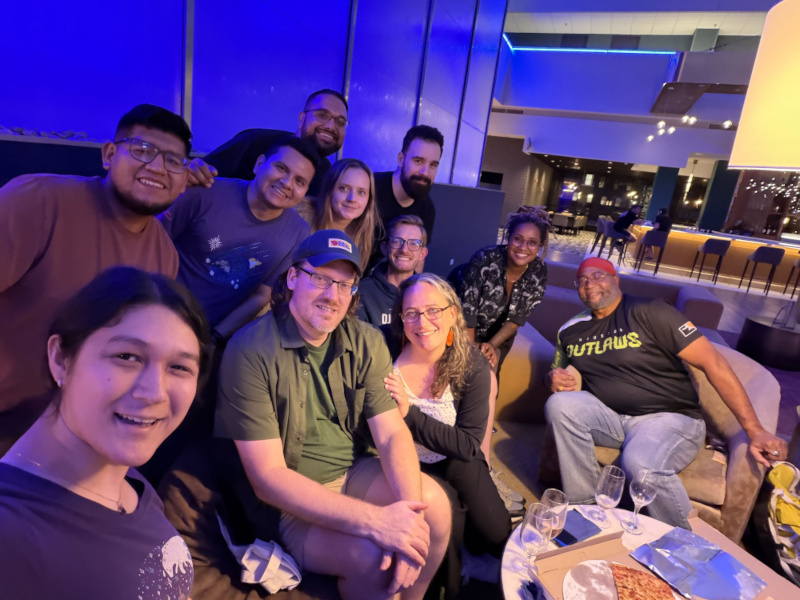
Something nobody told me about beforehand is how much fun it is watching new folks show up and grow into community members over the course of a single week. Hearing people like Robin and Eddie talk about showing up knowing nobody, unsure what to expect, and then say they want to come back every year and contribute to the community simply warms the heart.
Catching up with remote friends
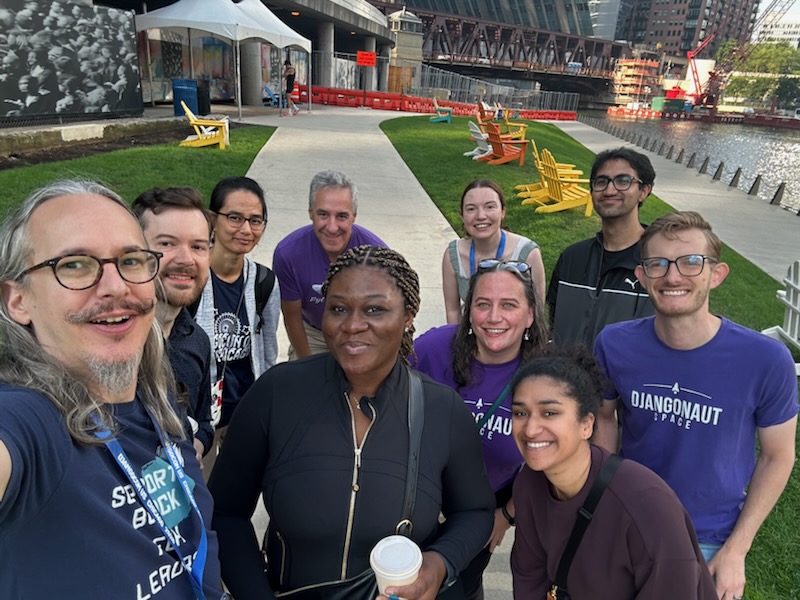
I love getting to talk in person with community members I usually only interact with online. This year was a special treat. Sarah Abderemane and Sarah Boyce made the trip over the Atlantic, allowing the five founders of Djangonaut Space to be in the same place for the first time. And on Wednesday morning some of the members of Djangonaut Space gathered on the river for coffee and cosmic connection. It’s so heartwarming to see this organization do its thing and watch people step up to lead.
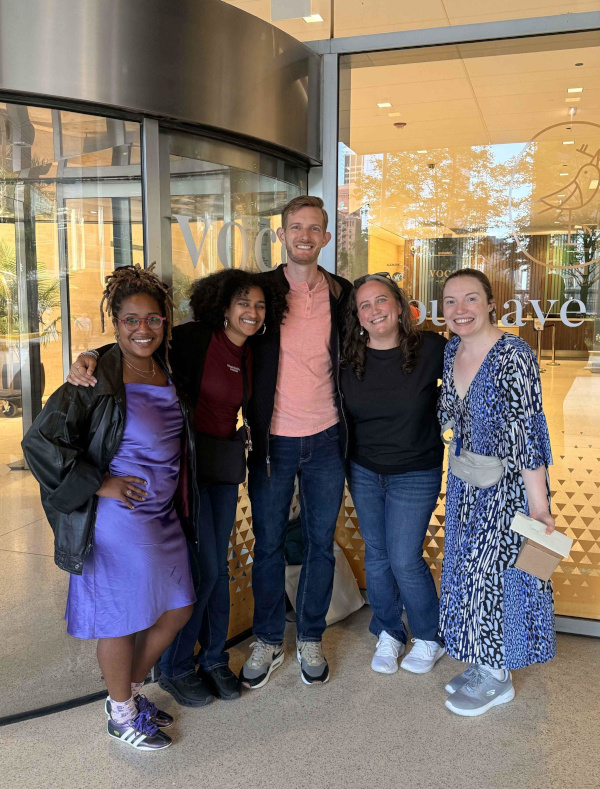
Beyond that, we had all three of the Django Fellows in person this year. I had long conversations with each about the state of Django and the future. They’re incredible people, so those conversations are always a lot of fun.
The talks that stuck out for me
My taste in talks this year leaned toward generalized discussions of complex topics from experienced speakers. The three keynotes come to mind here, where we got to see Dawn Wages, Sarah Boyce, and Karen Tracey share their wisdom on community, the nuances of code review, and what’s new in Django, respectively.
I enjoyed Josh Thomas’ overview on how he uses agents in a robust development environment to work more productively.
Will Vincent’s talk on modern Django deployments was impressive. It’s something I’ve wanted to write up myself but never had the discipline to get it down concisely. Will managed to keep first things first here.
Calvin Hendryx-Parker and Frank Wiles presenting the differences between Django and FastAPI was a lot of fun. It was neat to see where things slow down and how similar the implementations are at times.
Elizabeth Christensen gave a nice talk on new features in PostgreSQL. The temporal constraints and uuidv7 additions are pretty exciting.
Jacob Walls gave an excellent talk on Django’s new auto-fetch modes, including when a person shouldn’t use them.
Andrew Selzer presented a well-put-together talk on contributing to open source. It was solid information and a great primer for anyone looking to get involved.
I enjoyed seeing how Natalia Bidart works with HTMX and Django. For me, these technologies are well-matched, but something still feels off in the integration. It was reassuring to see that I’m not missing something obvious and it may just be a comfort thing.
Other highlights
Open spaces were held Monday and Tuesday and seemed to be well-liked and well-attended. Shout out to Velda Kiara and Eric Sherman for putting that together. I hosted one about maintaining open-source libraries, where I had a good discussion with Bob Florian, and then attended another about performance. There were also several AI-related open spaces that looked popular.
If you were an early morning riser, you likely found Aman Singh rallying folks into walking to The Bean and grabbing a latte. As a morning person (or maybe just a poor sleeper), I had a lot of fun watching Aman grow his daily adventure from a few enterprising folks Monday morning to a solid squadron of ten people by Thursday morning.
My friend Theresa Seyram Agbenyegah, AKA Stancy, gifted me a wonderful PyCon Ghana notebook.
Marc Gibbons had me try ketchup chips for the first time.
Ken Whitesell kept Jeff Triplett and me up into the wee hours of the morning to discuss Django and the community. Okay, I’ll fess up. Ken wasn’t the instigator here, but he was at least partially culpable!
Several people came up unprompted to ask how the mentorship business is going, which truly means a lot to me.
Organizing the sprints
This year, I was chair of the sprints team along with Kudzayi Bamhare. We made a strong effort to make the sprints hybrid, including having the morning presentations shared on Zoom. Thank you to Doreen Wanyama for supporting sprints virtually this year too.
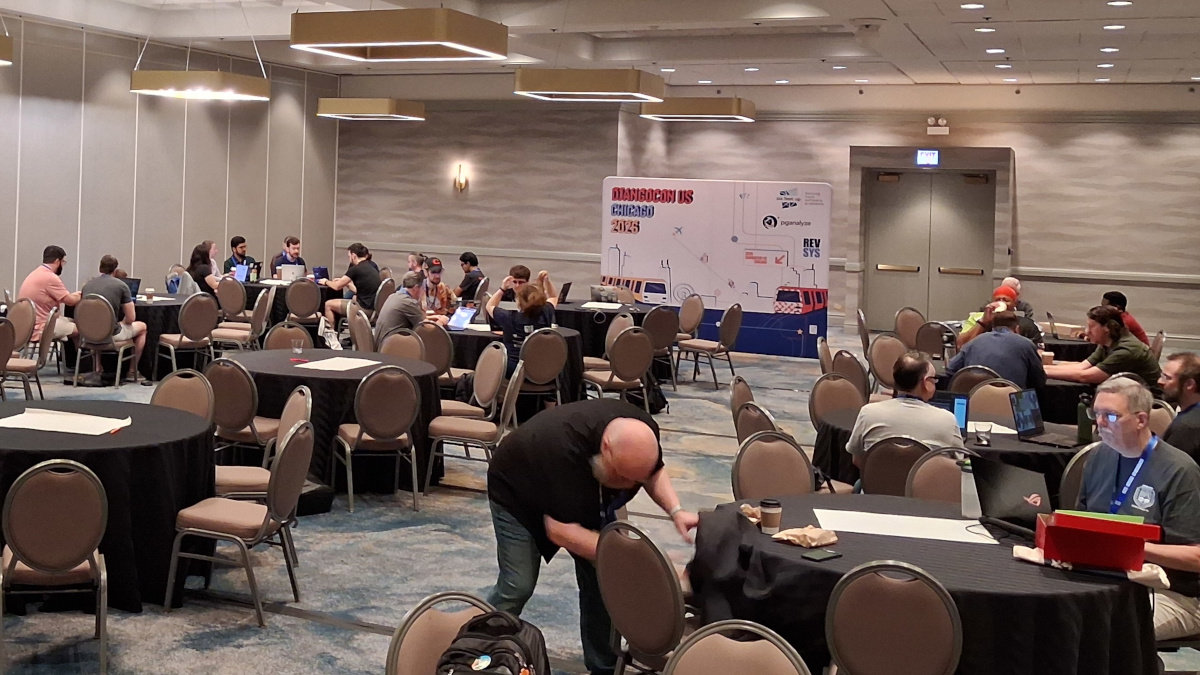
As with most first implementations, there were some gaps and compromises that limited both in-person and virtual attendee experiences. At the moment, I’m happy with how sprints turned out. From my perspective, people were able to engage with topics that interested them and collaborate with others. However, it’s possible others had a lesser experience, so if you have thoughts about this year’s sprints, please share them!
Thinking forward to next year
So yes, DjangoCon US is still the conference I will attend each year. It’s an absolute blast getting to see my old friends and make new ones. Each time I learn about new things going on in the community and can share a bit more about myself.
If you’re on the fence about attending DjangoCon US next year in Riverside, CA, take it from me: it has everything you’re looking for, welcoming people who want to share knowledge, hear what you have to say, and help you be better.
So buy your tickets today. You won’t regret it!
If you have thoughts, comments, or questions, please let me know. You can set up a meeting with me, or find me on the Fediverse, Django Discord server or use email
Written by Tim Schilling
Django 6.x Steering Council member, maintainer of django-debug-toolbar and django-simple-history, and a professional software engineer since 2009. These days, I mentor developers one-on-one.